Technology & Pedal Collective: A Tool, Not a Crutch
Human-led, technology-assisted: That’s the balance we’re aiming for.
Jon Dennis
4/7/20263 min read
The logistics industry loves to talk about the future. Log onto LinkedIn (even as a worker at a small, independent co-op with a pretty select following) and you’re fed a steady stream of it: autonomous take-away drones, driverless vehicles and dispatch systems with the human edited out entirely.
Look a little closer and the cracks start to show. Those cute robot drones that trundle around Filton? Stopped dead by a café A-board on Gloucester Road whilst the take-away gets cold inside. The AI-powered delivery company shouting about all their awards on LinkedIn? 1.5 stars on Trustpilot, with apparently, the majority of their packages going missing. The shiny new four-wheeled cargo quads built to look and operate like a small van? Watch one try to get down the cycling infrastructure on Chocolate Path, or try to repair a puncture on the road, and you realise it’s not quite designed for the real world.
No doubt this tech will improve, and in time it’ll become more common, but why? Even on a pure cost basis, it’s really not clear the numbers stack up once you factor in real-world friction: expensive tech failures, maintenance, supervision, and the messy unpredictability of streets. Delivery isn’t just point A to point B. An experienced logistics worker is constantly adapting: navigating access issues, dealing with customers, making judgement calls, finding sensible safe spots to leave parcels and fixing problems on the fly. So what problem is this technology actually solving?
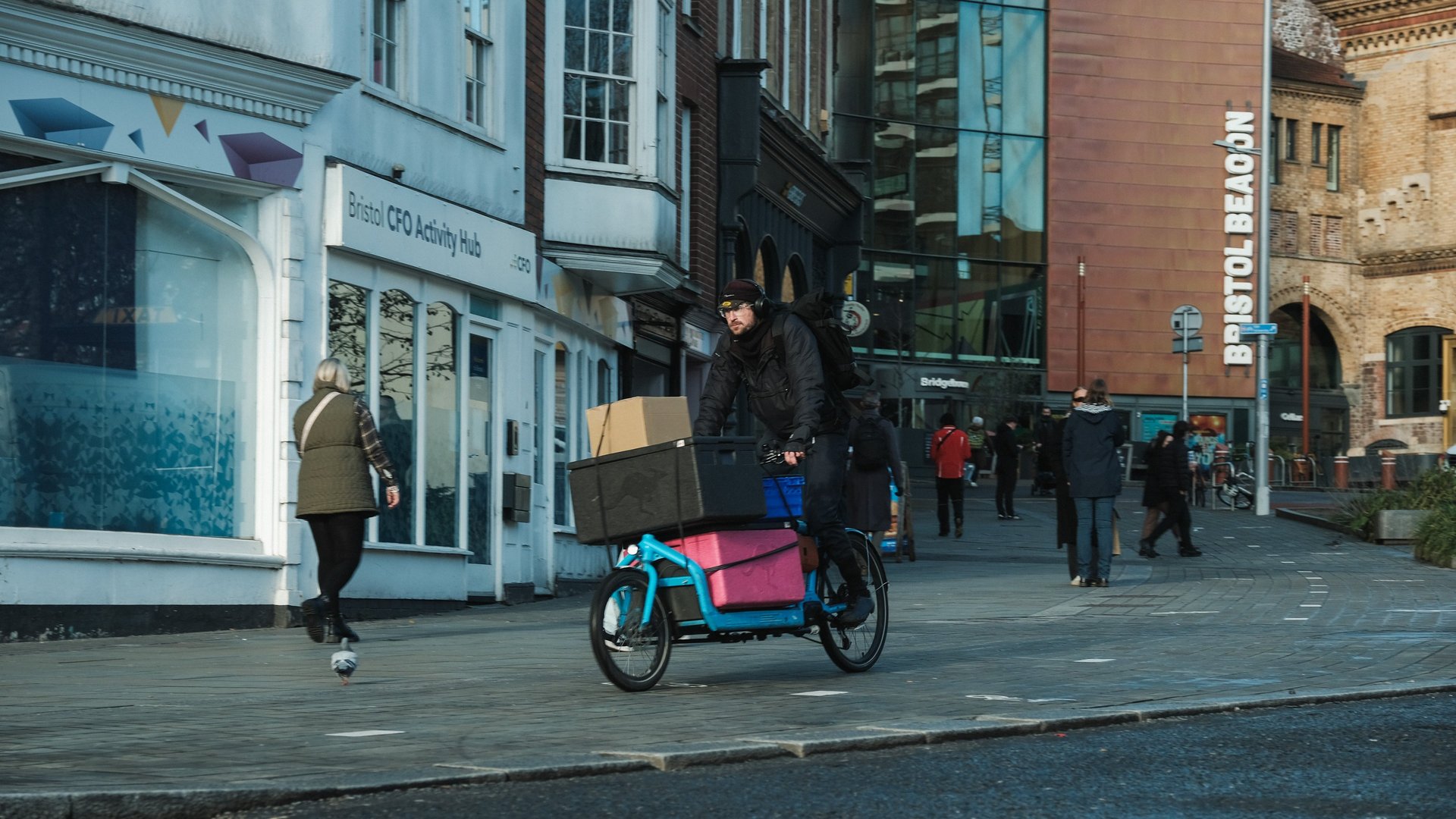
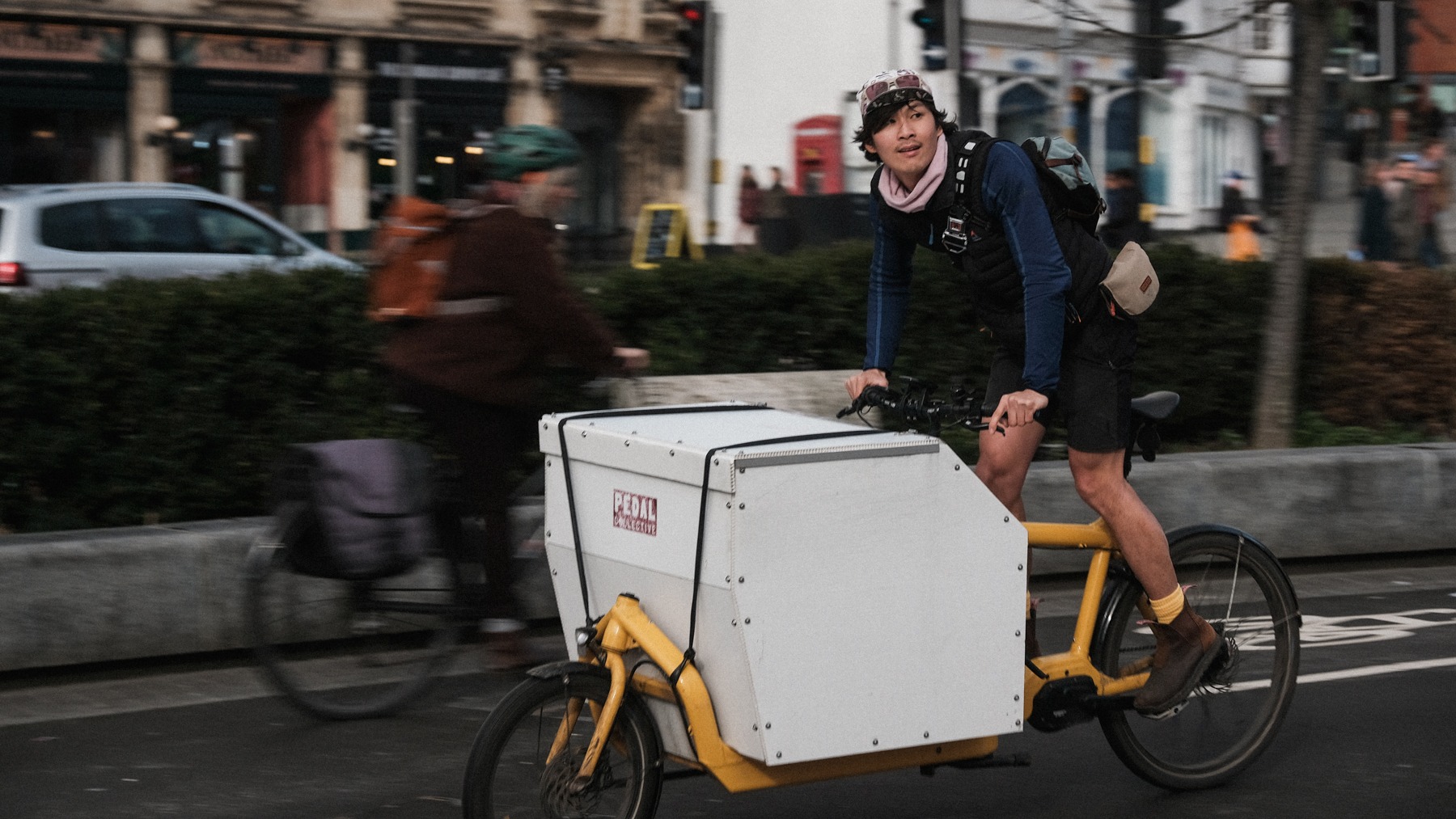
Take the bikes we’ve chosen for our fleet. We ride fairly traditional two-wheeled, front-loading cargo bikes that have existed in some form for nearly a century. They carry slightly less than some of the newer quadracycles. And yes, they demand a little more from the rider. A 100kg load on a cargo bike doesn’t move itself. It takes training, skill, awareness and a bit of leg muscle. A genuine pedal-assist motor creates a natural speed limit. In the mixed-use streets, cycle paths, and crowded urban spaces where cargo bikes operate best in, that built-in restraint does make a difference: it leads to safer, more considered riding.
Skilled, experienced riders aren’t just safer, they’re more invested: In their work, in each other, and in the communities they move through. A deskilled, high-turnover workforce (“disposable and replaceable” as one of my previous employees in the same-day courier industry politely named them) doesn’t build anything.
We’d rather invest in people than rely on technology to paper over the gaps.
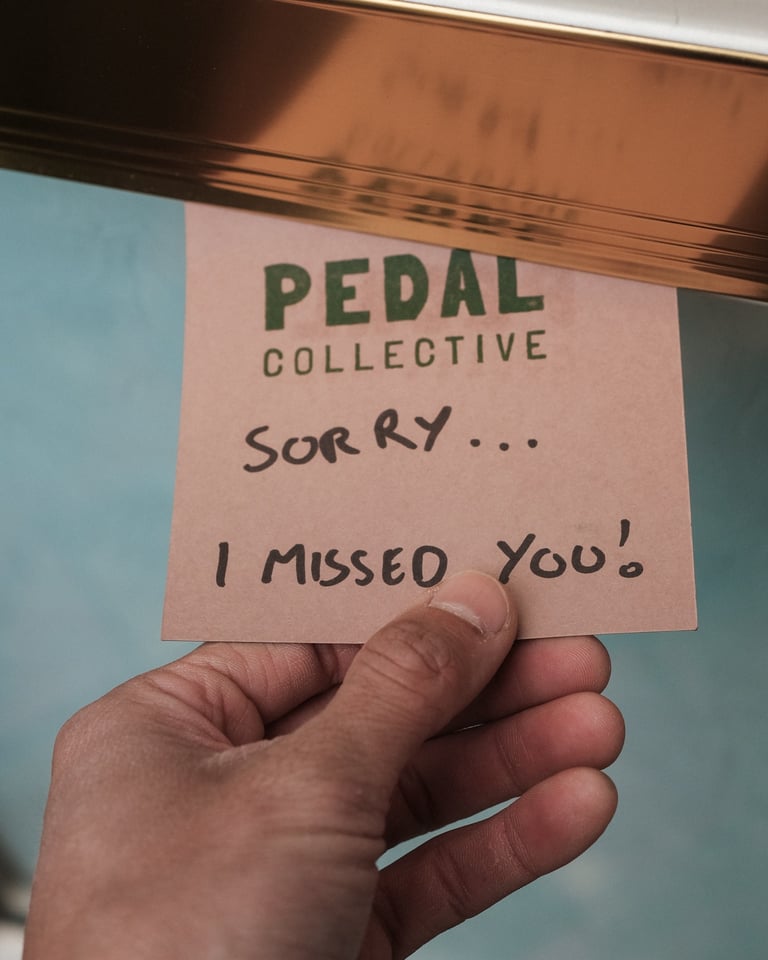
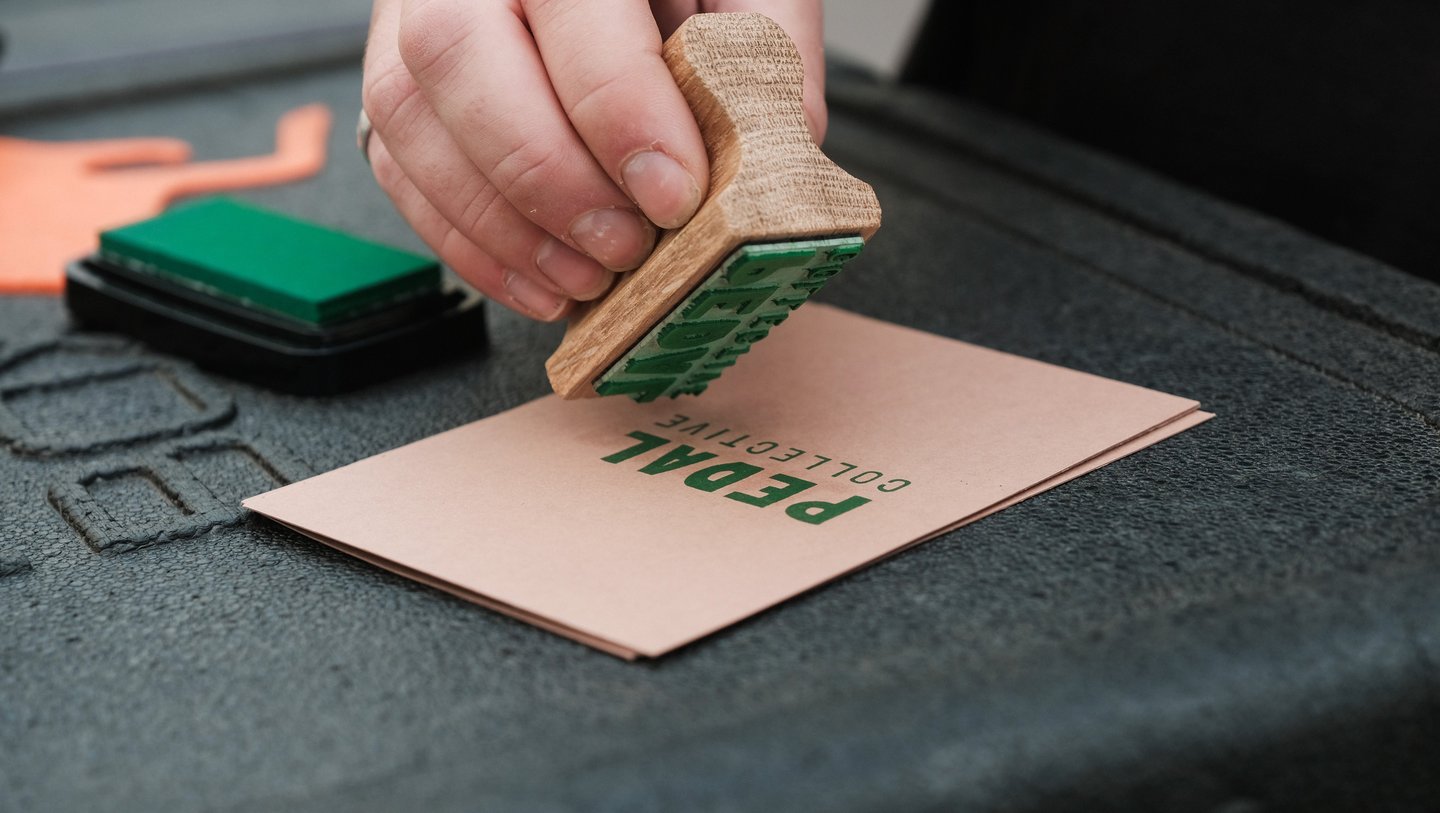
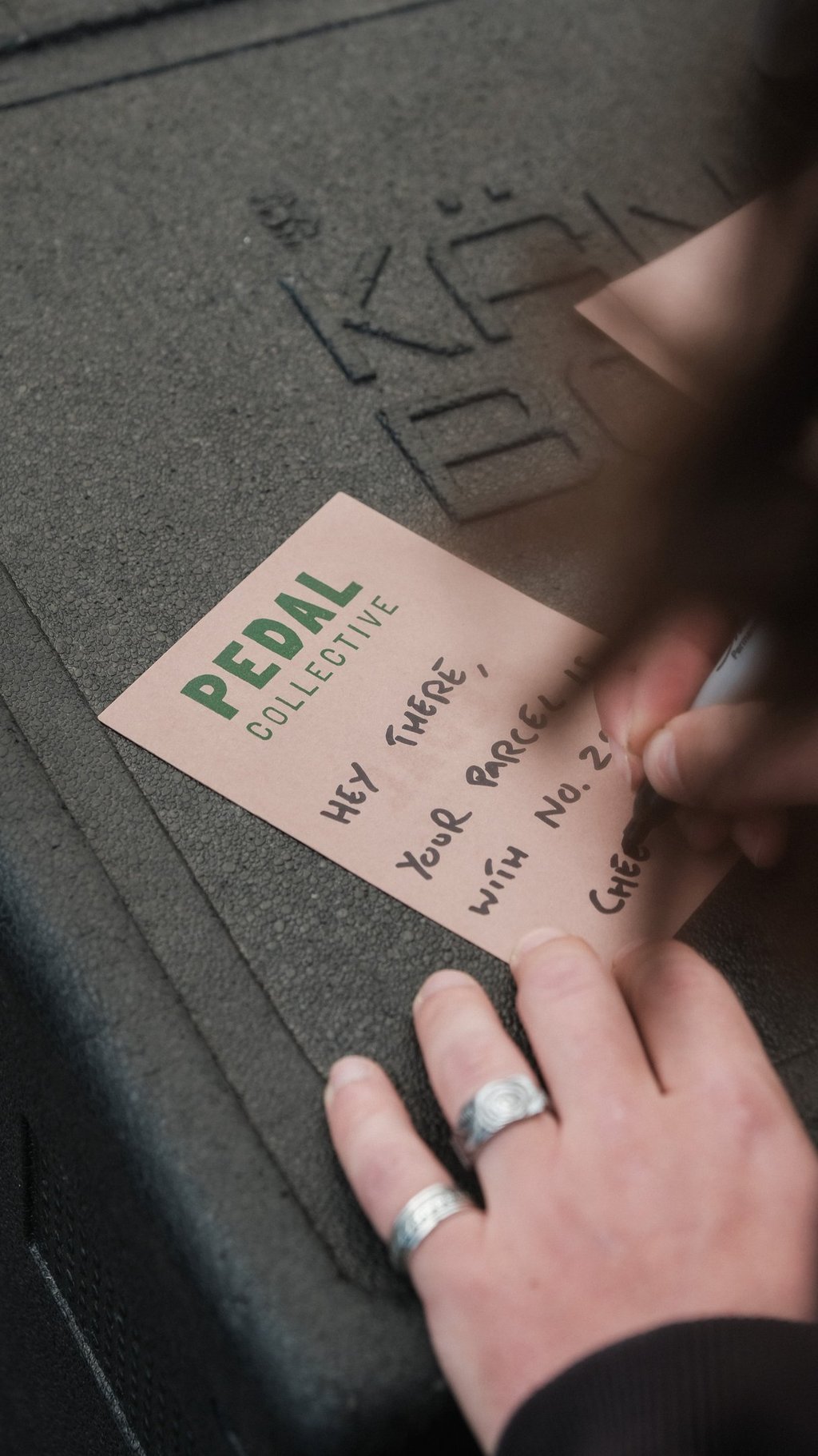
Then there’s something as simple as a “Sorry I Missed You” card. In 2026, we still use them. If we’ve left a parcel in a less-than-obvious location, or with a neighbour, that card can make a difference. In an age of push notifications and delivery apps, a physical card through the letterbox is quite deliberate and it’s human.
We don’t reject useful tools. Our dispatch software optimises routes, cuts unnecessary mileage, makes the job smoother and sends an automatic email when we leave your parcel in a safe place. We use it because it helps but we are careful about the balance. Technology should work for us, not the other way around.
Human-led, technology-assisted: That’s the balance we’re aiming for at Pedal Collective. We are a cooperative built around people: our riders, our clients, and the communities we move through. Technology earns its place when it strengthens that. When it doesn’t, we are happy to leave it out and find a different solution.
What we’re really trying to do at Pedal Collective is build resilience. A network of local businesses, connected by people who know their streets, their customers, and the realities on the ground. When systems are stretched, by rising fuel costs, global pandemics, supply shocks, or technological failure, local knowledge, adaptability, and simple, reliable tools matter most.
Simple bikes. Skilled, experienced, valued workers. Strong local links. It might not look all that futuristic, but it works, and has done for a while now, and more importantly, it holds together when other things don’t.
Above: In-house stamped SIMY cards by Fred & personalised written notification.
At Pedal Collective, we don’t ignore technology: we rely on electric pedal-assist motors and clever dispatch software every day. But these are tools that support us, not systems designed to replace us.